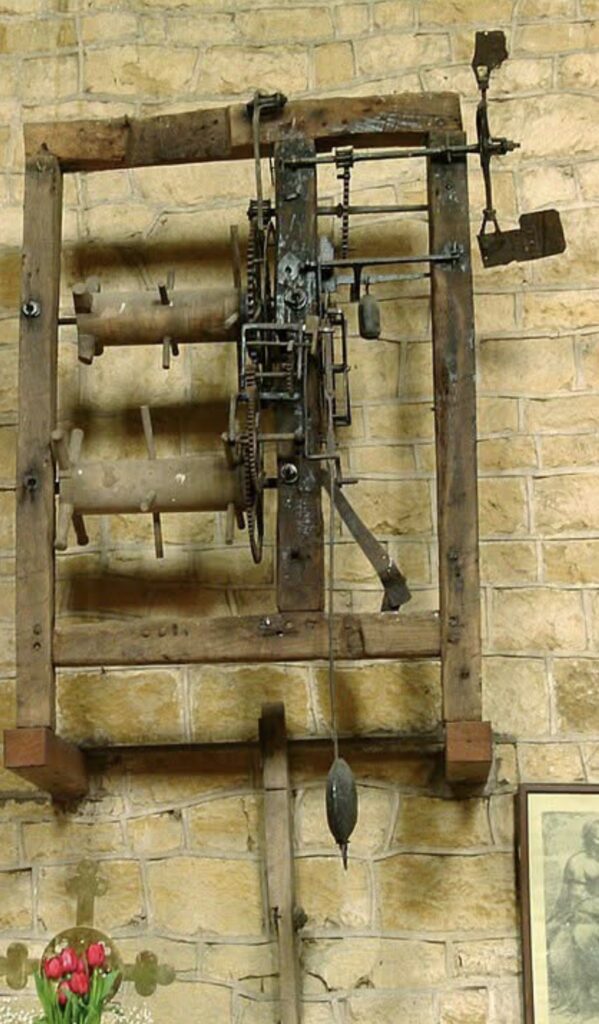
Within the inventory of Bolton’s Central Museum is item number INV:21901 , remains of a timber doorframe style turret clock, found in the basement of Hall i’th’ Wood in the 1970’s, it resides securely in the museum store, unloved and incomplete, and not worthy of display.
This 17th Century clock, has an undocumented origin, but has a place at the centre of the history of Bolton, and begs the question, could this be the original clock, the 17th Century Clock, once called the ‘Oldest in Lancashire’ that originates from the Old Parish Church?
The Mystery Clock
The remains of the Mystery Clock
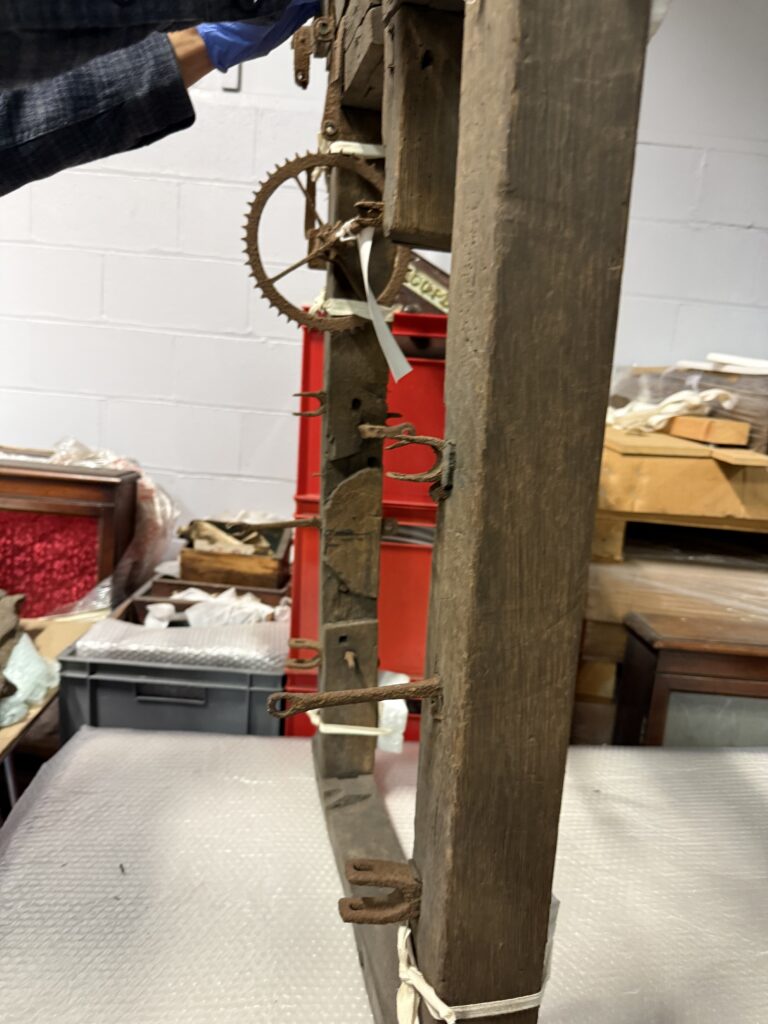
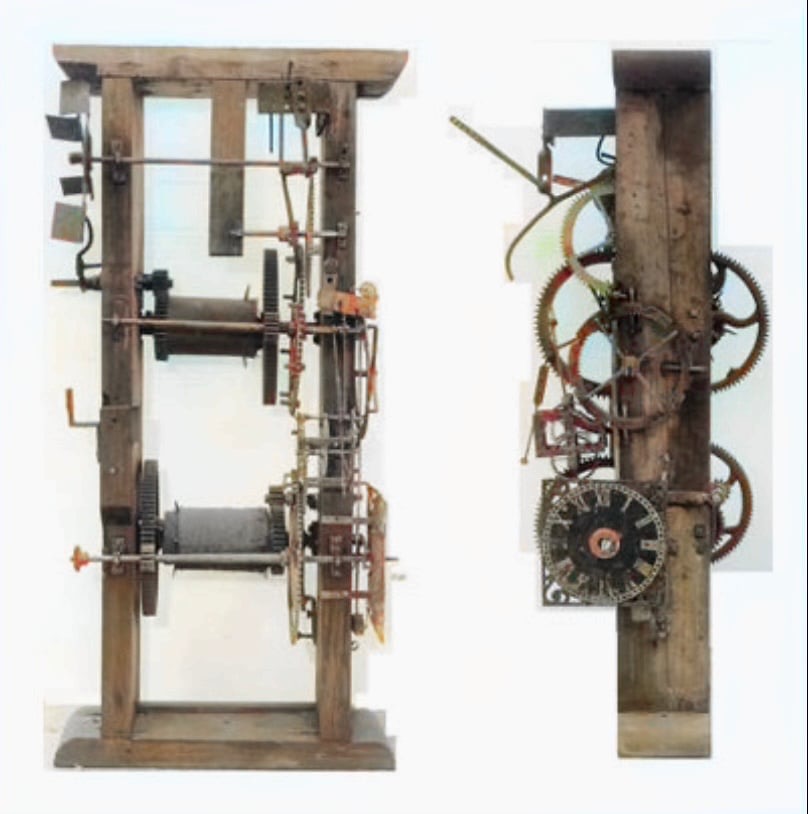
The clock style and construction is indicative of 17th Century Church Clocks similar to the known example at Brindle Church.
The Brindle Parish Church clock was made by Thomas Kirkwall of Bolton-le-Moors in 1637, and as a clock maker from Bolton he is likely to have been familiar with the Bolton Old Parish Church Clock.
The Brindle Parish Church Clock
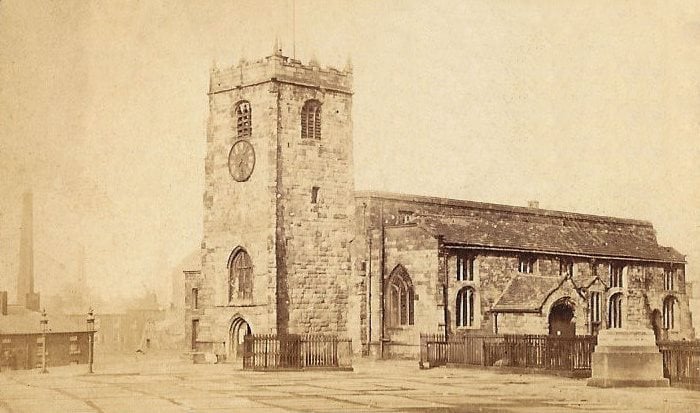
Bolton Old Parish Church was known to house one of the earliest clocks in Lancashire,
The clock was installed in the Old Parish Church in 1671 by clock maker John Lyon of Warrington, the first clockmaker in Lancashire, in visiting the town he was likely to have known Bolton’s Clockmaker Thomas Kirkwall.
The John Lyon Clock in the Old Parish Church
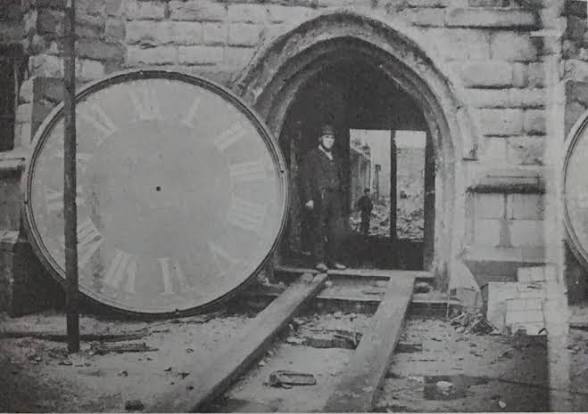
St Peter’s Church (The Old Parish Church) was demolished in 1866, to make way for the new Parish Church built between 1867 and 1871.
The demolition of the Old Parish Church 1866
The Old Parish Church,
The 15th Century Church replaced a Norman Church which in turn had replaced two earlier buildings. The south porch was rebuilt in 1694. The “Cheetham “and “Bradford” Chapels occupied the east end of the aisles either side of the chancel. The church was modified over time, however it fell into disrepair and was not weathertight. It was demolished in 1866.
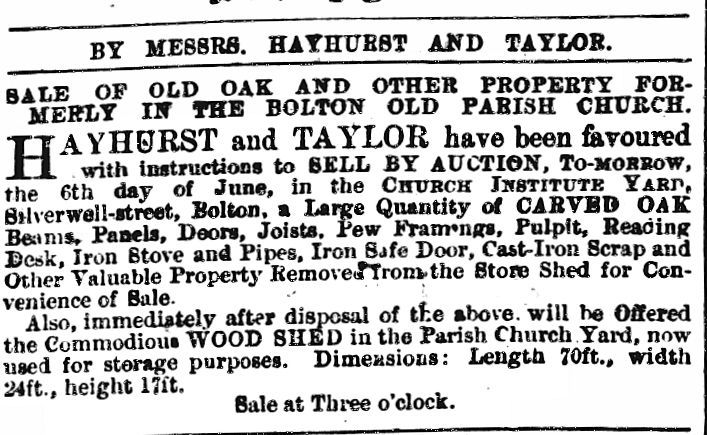
Sale of items On 6th June 1871, at three p.m. there was a sale conducted by Hayhurst and Taylor, of the oak and other property formerly in the Bolton Old Parish Church. The sale was conducted in the Church Institute on Silverwell Street, which also included a commodious wood shed, used for storage during the demolition.
Newspaper advert for the sale of items from the Parish Church 1871
Humphrey Cheetham bequeathed, in his will of 1653, a chained library ‘of godly English books’ to the Parish Church in Bolton, it stood there may years and the books of Cheetham’s library were documented as transferred to the Grammar School when the condition of St Peter’s Church became a hazard to them.
Cheetham’s will also provided libraries to Manchester, Gorton, Turton and one for Walmesley Chapel (never completed) at the same time. There are striking similarities with the designs of Cheetham’s Library and the one from the Grammar School.
The ‘Gorton’ library was described as the Ancient Armarium or Almere with lectern, where the books are changed on two shelves decided into partitiones. The books are shelved on the fore edge rather than the spine facing outwards to prevent the chains from rubbing against the bindings with use. Originally a long sloping shelf infront of and immediately below the side opening doors would have served to rest the volume when in use.
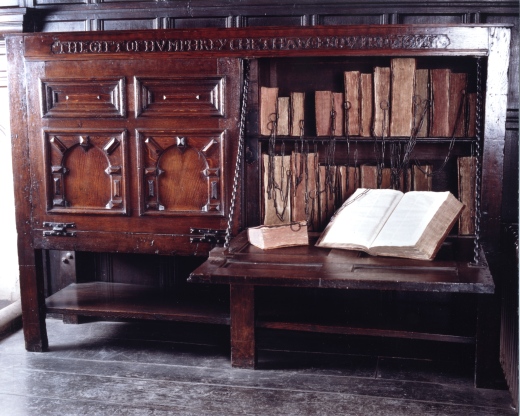
The library case from the Old Grammar School in 1694 is attributed to Robert Lever was acquired by Leverhulme and transferred to Bolton School.
The chained Library in The Old Grammar School bearing a remarkable similarity to the design of Cheetham’s Library described above.
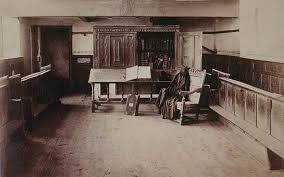
As well as the library, the headmaster’s Chair and the school chest were also acquired by Leverhulme for his Bolton School.
Chadwick Museum was bequeathed by Dr Samuel Taylor Chadwick, Chadwick left £5000 to the Bolton Corporation for the ‘building, furnishing and maintenance of a Museum of Natural History in the Bolton Park’ later renamed Queen’s Park and building commenced on the museum in 1878 and was opened on 12th June 1884 by Councillor B. A. Dobson of Dobson & Barlow Ltd. cotton machine manufacturers. Curator William Midgley managed the institution (serving from 1883 to 1906),
Chadwick Museum, Bolton Park.
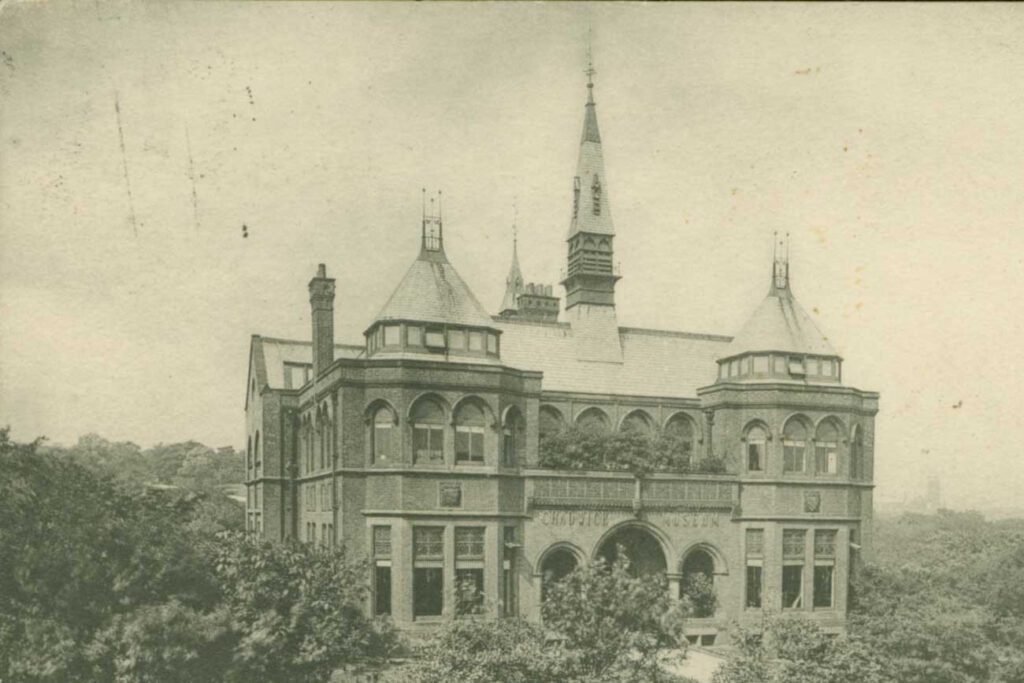
The Chadwick Museum, had collections of many items, based on three floors, including many Natural History Items, and also local history items.
A search of the Accessions list, found no mention of the clock.
Bolton Old Grammar School has quite a confused and hidden history that surrounds the school.
The original Bolton Grammar School was first recorded as a going concern in 1516, the site was two Tudor era thatched cottages in Churchgate by the Parish Church.
The endowed school buildings by Robert Lever described as the old school house were let to John Magnell and Thomas Frankland in 1735.
The building in the Parish Church grounds dates from 1641 and was formally refunded by Robert Lever in 1644
The failing Bolton Grammar School was closed down, and students were amalgamated with Bolton High School for Boys in 1880 and then the Old Grammar School was demolished.
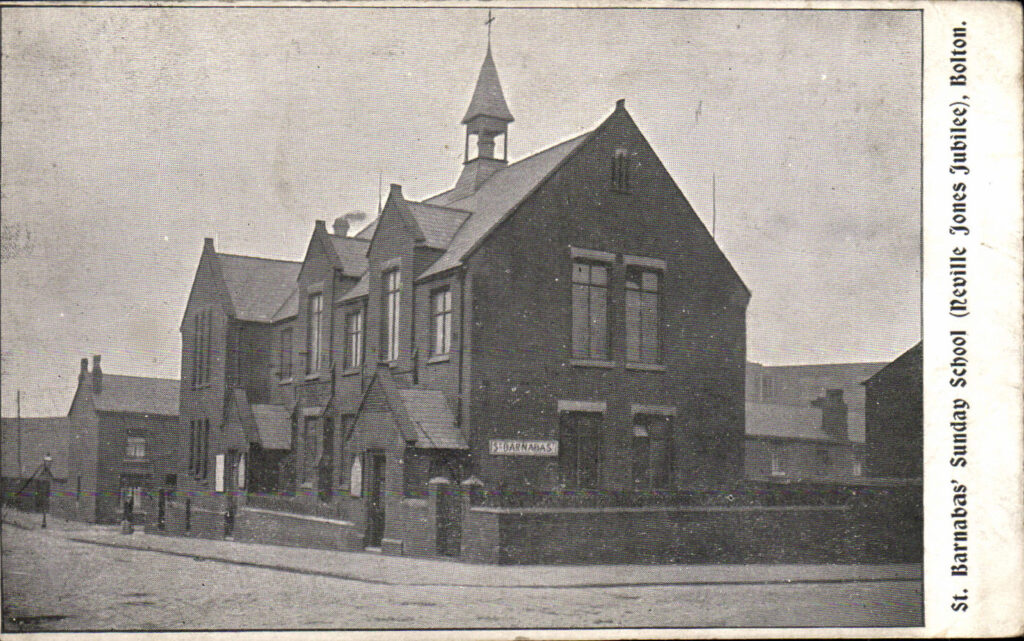
Bolton High School for Boys the Bolton High School for Boys, founded by William T Mason, (formerly a schoolmaster at the Church Institute, and teacher for Viscount Leverhulme), it was based in the Duke Street Academy in Davenport St. In 1890 the school then operated out of the Neville Jones Jubilee School on Thomas Holden Street.
Bolton High School for Boys, Thomas Holden St, Neville Jones Jubilee School, also known as the St Barnabas Sunday School.
Headmaster W. T. Mason received a remarkable gift when leaving, a casket with 500 Gunneas (£525), he moved to Abergele in Wales where he married, but Mason retained close links with Leverhulme, and returned from Wales to open Lever Park for the town.
Bolton ‘New Scheme’ Grammar School,
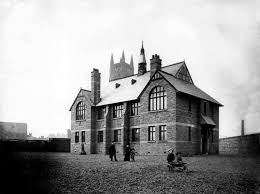
The ‘New Scheme’ Grammar School as it was referred to in documents was designed by R Knill Freeman and opened on the same site as the Old Grammar School had occupied on 11th September 1883. it bore a striking similarity to the old building but is clearly distinguishable between the two.
The ‘New Scheme’ Grammar School and Market Cross
In 1899 as agreed, when a suitable venue could be found, the ‘New Scheme’ Grammar School amalgamated with Bolton High School for Boys, and moved to Westbourne where it remained until 1932.
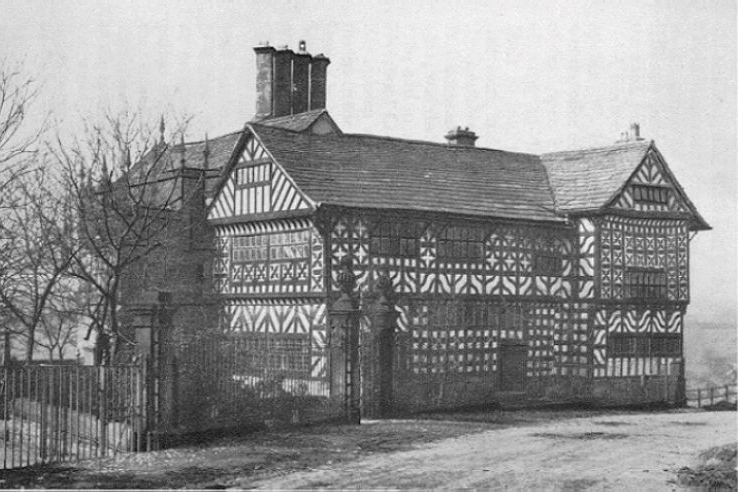
Hall i’ th Wood, home to the ‘Norris’ family durning the 1700’s Norris was a senior parish official. The hall was purchased by the Industrialist William Lever, (Lord Leverhulme) purchased the 16th Century house called Hall i’ th’ Wood. He presented the house to the town in 1900, and it opened in 1902.
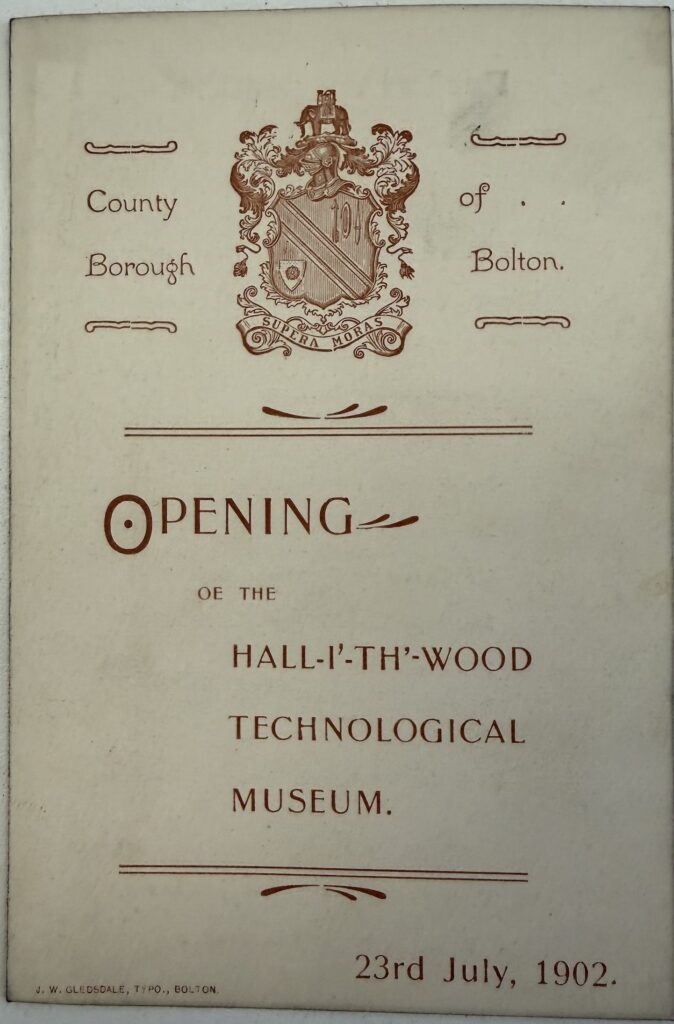
Lever established his Folk Museum at Hall I’ th’ Wood, with the furnishings and exhibits structured on Samuel Crompton and 17th Century Bolton.
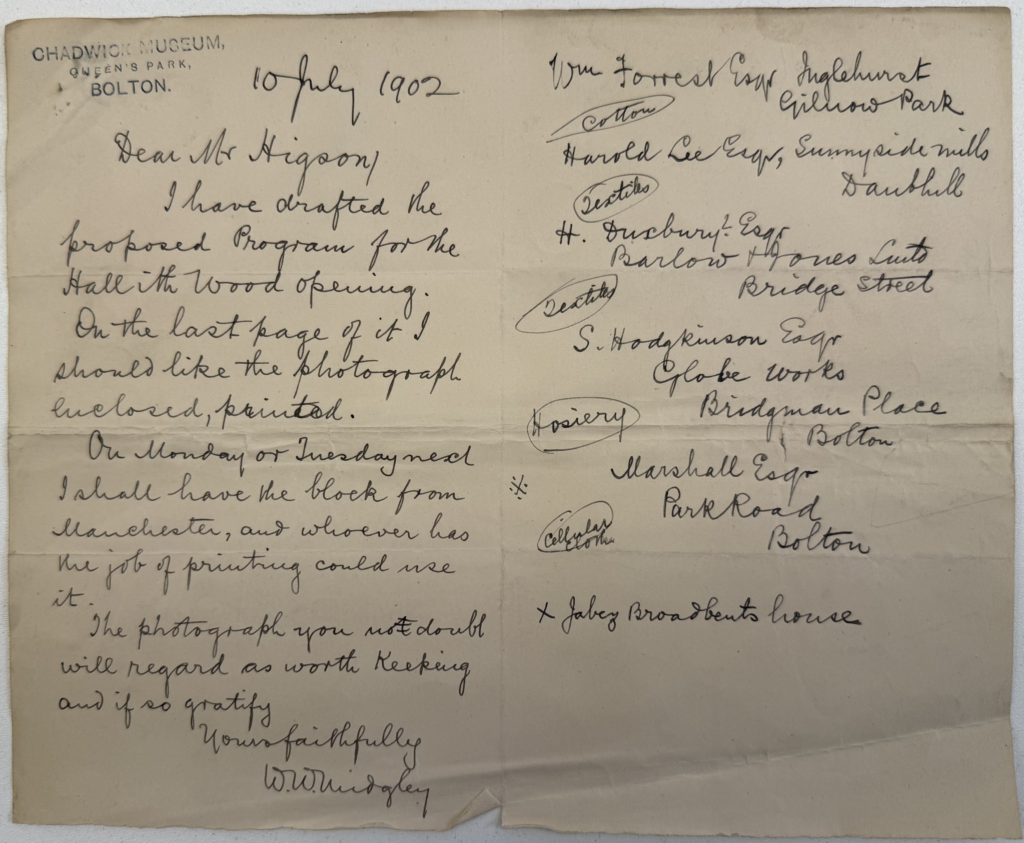
The curator of the Chadwick Museum, Curator William Midgley, was front and centre in organising literature and publications for the opening event, showing the close ties between the museums and the council.
In 1907 on 13th November, J. W. Taylor, of Joshua W. Taylor Ltd., Bradford Street Bolton, Identified in his letter a number of items of concern in relation to there structure of Hall i’ th’ Wood. the cellar needed significant rebuilding walls were bulging and Oak pillars were moving.
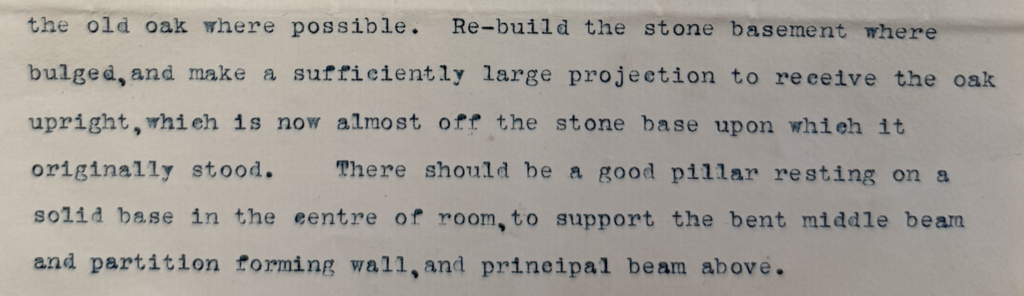
It is possible that if the old clock was in the basement at that time, this could be the period that components were misplaced during the disruption to save the building from collapse.
From 1927 the house was further promoted as a museum, after approvals by Leverhulme in 1915 where changes were made to the accessions list.
The accessions List makes no reference to the clock, although its condition would have probably precluded its display.
The Noris Family were owners of Hall ‘i th’ Wood, and Alexander Norris was a senior parish official, and along with John Oakey, he may have played key a part in commissioning the clock in 1671.
Robert Harpur, Records exist of Robert Harpur being paid to wind the clock in the 1670’s – Robert Harpur was vicar after Richard Goodwin. Entries made in November 1671/2 ‘that Robert Harpur clerk undertake to make the clock go’ and again in June 1675/6 ‘that Robert Harpur clerke undertake to make the clock goe orderly’.
PBO/2/1 Churchwarden Accounts for Great Bolton 1655-1680.
He was the clerk by this time and no longer the Vicar.
The Old Market Cross, Churchgate As well as being the centre for market activities for many years, with adjacent Butter Market on Windybank (Bank St), Churchgate also provides the site of the ancient market cross, which was removed for the convenience of coachmen in 1776 to the Old Grammar School, then the News Scheme Grammar School, and was finally transferred by Leverhulme and now resides in the Bolton School Grounds.
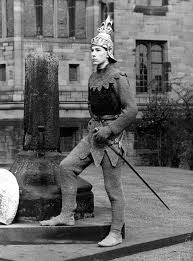
The Old Market Cross and Sir Ian McKellen at Bolton School
The case for Leverhulme.
The first Viscount Leverhulme, William Hesketh Lever, later Lord Leverhulme had more than a passing interest in antiques and antiquities, founding such wonderful assets as the Lady Lever Art Gallery in Port Sunlight, In his lifetime Lever collected more than 20,000 works of art. His art collection had started modestly much earlier in the 1880s but as he grew richer he was able to collect on a vast scale.
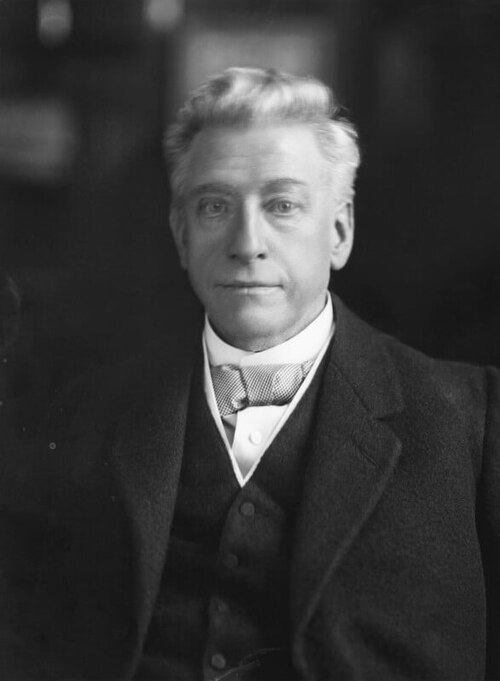
Lever was busy collecting items from the `Old Grammar School’ and the Market Cross, the availability of the 17th Century Parish Church Clock from next door can not have gone unnoticed? especially as he had teams of foragers and local people forwarding donations to him.
The case for the clock.
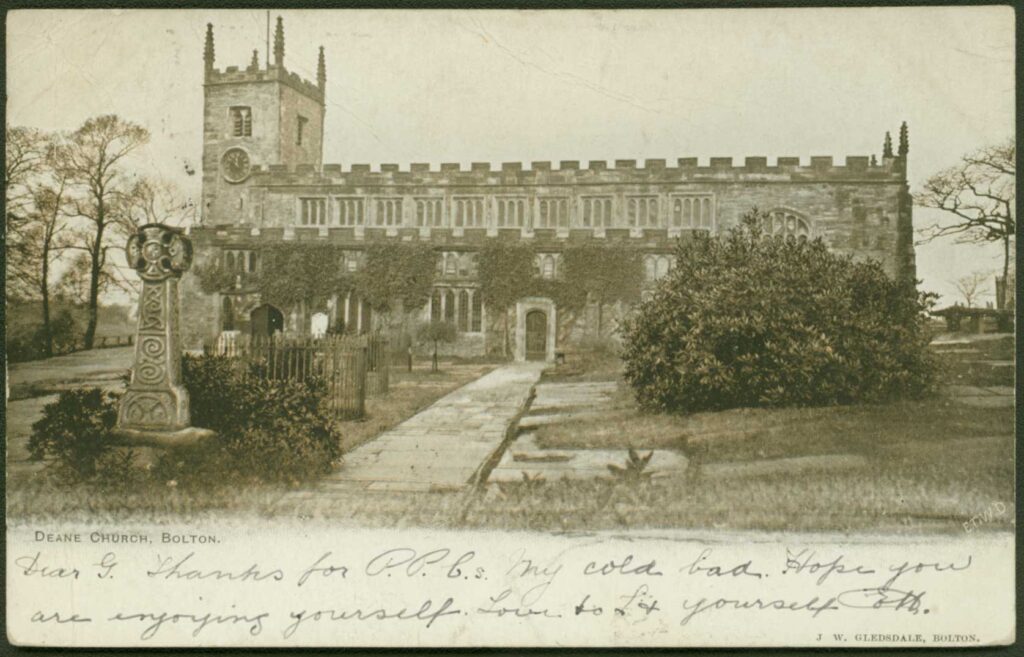
The case for Deane Church Clock
The clock at Deane Church dates back only to 1816. It was made by William Leigh of Newton, Lancashire and there is a plaque in the ringing room dated August 30th 1816. there is a smaller plate that notes This Clock was re-arranged and restored by William Lee of Bolton in the year 1900 a.d. being the 62nd year of Her Majesty Queen Victoria’s Reign. it was electrified in the 1950’s and up[dated in 2010.
Deane Church Clock 1902
The case for the Parish Church Clock.
It is known that the Parish Church Clock, one of the oldest in Lancashire was believed ’thrown away’ at the time of the demolition, it is also known that other than Deane Church, no other early church in town was of the status deserving of such a clock.
The demolition of the Church coincided with the building of the Chadwick Museum in 1870s, a museum holding exhibits of Local History.
Leverhulme was known to be collecting items from the time, and from the vicinity of the Parish Church and Grammar School about the turn of the century, they now reside in Bolton School, the same time that Hall i’ th’ Wood was also procured for the town.
Close links between Leverhulme, Curator William Midgley, The Chadwick Museum, Hall i’ th’ Wood Museum, the shared interests of Local History and artefacts of that age, and items secured for their history and exhibition in both ventures.
The clock being found abandoned in the Cellar of Hall i’ th ‘Wood, an area that was in focus for significant repairs early in the life of the Hall i’ th’ Wood museum, would suggest the cellar was of direct interest to Leverhulme, and it would likely have secured his attention.
The severely dilapidated state of the clock would prevent its exhibition, in a ‘new’ museum, and would explain its relegation to the cellar.
If the old clock wasn’t of interest to the town, why would it ever have been retained especially in such a dilapidated state, and why would it be in Hall i’ th’ Wood.
Conclusion:
So the key question is this the long lost Parish Church Clock?
Well we may never know for certain, but there are a number of events, linkages, coincidences and similarities and opportunities that suggest this ‘could’ be that lost clock.
It certainly cant be proven beyond reasonable doubt, but on the balance of probability, it could be, but I will leave you to decide.
I am happy to believe this just could be the Old Parish Church Clock…….
The clock would have probably looked something like this when it was in working order…
I wish to thank Bolton Museum and Bolton Libraries for their assistance in researching this clock, and securing photographs.