Watchmaker William Williams of Radcliffe, built a reputation for creating early ‘stop watches’ these were normal pocket watches capable of being stopped, but also measuring to a small time division, in this case 1/16th of a second. Usually used for whippet racing, they were useful in other sports, including rowing.
This watch made in 1889/90, was his best example yet, but is exceptionally rare being marked as 99 Blackburn Street, Radcliffe, and not the usual Bury or Liverpool.


The watch was owned by the Tailor Robert Frederick Hinson (1853-1913), of the Cambridge Town Amateur Rowing Club, the Amateur Eights. The watch was later owned by his son and namesake, before being handed down through the family.
Early records show the existence of the ‘Cambridge Boat Racing Club’ in 1844, the largest contingent of which went on to become the ‘Cambridge Town Rowing Club’ in 1863. The Town club was formed by John Harvey in the working men’s club that used to be located on Market Hill.
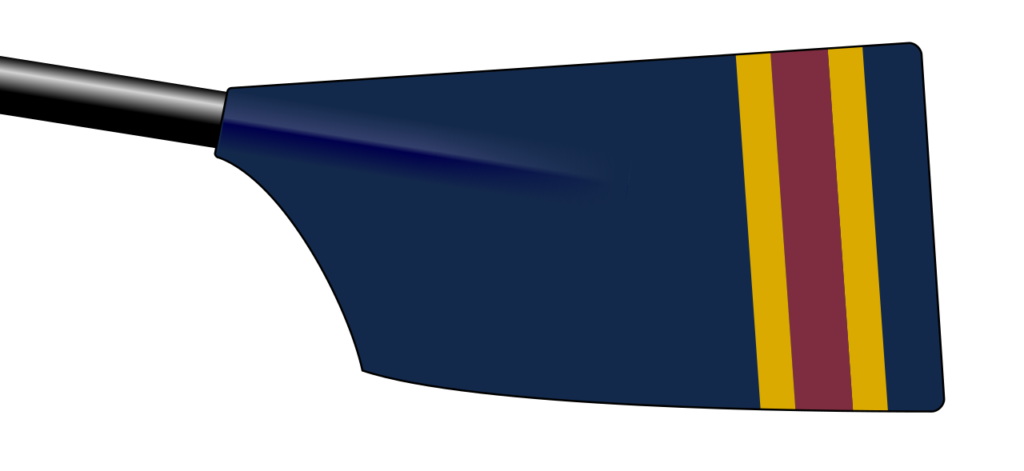
The Rowing Club was disbanded for World War One, and then reformed, this then formed the core of what became City of Cambridge Rowing Club in 1932. The club’s colours are Dark Blue, Claret and Old Gold.
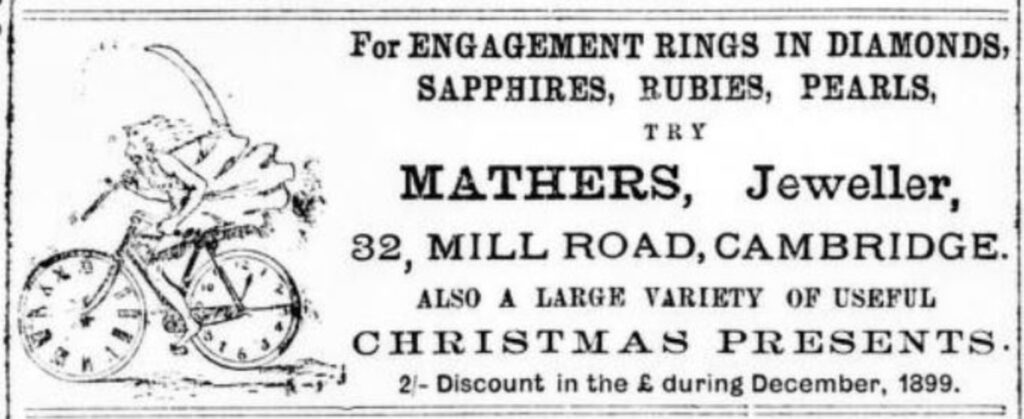
The watch was believed to be purchased from TA Mathers of 32 Mill Road Cambridge, and it retains the original winding key from the store.
The Rowing Races:
The Bumps racing commenced at Cambridge University in 1827 and are held annually on the River Cam in Cambridge, the first year starting with the “Lent Bumps”. Both Oxford and Cambridge Universities host two sets of university bumps races per year, one in early spring and one in early summer, each lasting four days. At Cambridge these are called “Lent Bumps” and “May Bumps.”
A bumps race is a form of rowing race in which a number of boats chase each other in single file, each crew attempting to catch and ‘bump’ the boat in front without being caught by the boat behind.
The boat in front could claim to be “Head of the River” if they avoided being bumped. The winning team of the Cambridge Bumps, were given the name Head of the River, or the “Headship”. (not to be confused with the Oxford’s Heads of River Race)
University Bumps had been held from the 1820’s onwards but the town bumps only really took shape with the formation of the CRA (Cambridge Rowing Association) in 1868.
In 1875 Cambridge Town Amateur Rowing Club, entered a team in the Town Bumps, with Fredrick Hinson as No 2, they not only won the event, but also wining the prestigious ‘Head Of the River’ award. This was a significant achievement as the local bumps races were establishing as an event and it would be the last time until 1951!
The team were awarded a Trophy Cup, inscribed “The Cambridge Town Amateur Eights 1875 A.O.F.B.C.” and “Floreat Cantabrica, (May Cambridge flourish)” on the reverse.
The engraved team names were:
Bow: W. Cawson
2: F. Hinson.
3: F. Hall.
4: F. Curtis.
5: C. Bright.
6: G. Burbage.
7: J. Hall.
Stroke: E. Gillingham.
Cox: H. Pace.
Their positions would have been as follows:
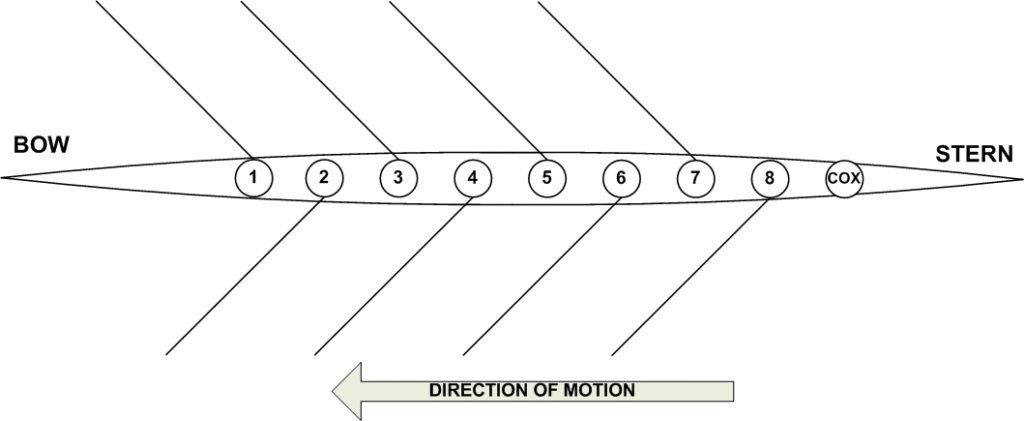
The bow pair of bow and “two”, who are the two rowers closest to the boat’s bow, are more responsible for the stability (called “set”) and the direction of the boat than any other pair of rowers, and are often very technical rowers. The bow of a stern-coxed boat is subject to the greatest amount of pitching, requiring the bow pair to be adaptable and quick in their movements.
The bow pair tend to be the smallest of the rowers in the boat. In an 8 boat, bow pair, strength wise, is often where the weaker rowers seat. Although weaker, they have some of the best technique out of the whole boat.
It is likely that the watch was purchased new to assist with training the team, it remained passed down from his son also Robert Frederick Hinson, with in the original family until 2025, it remains in incredible working condition today.
The 1875 Trophy was donated to the Amateur Rowing Association in London.